Technical Plumbing Profile

Water Heater Replacement & Water Heater Repair Solutions

Aging tanks past ten years with rusted bases or split seams require proper replacement and code-compliant installation.
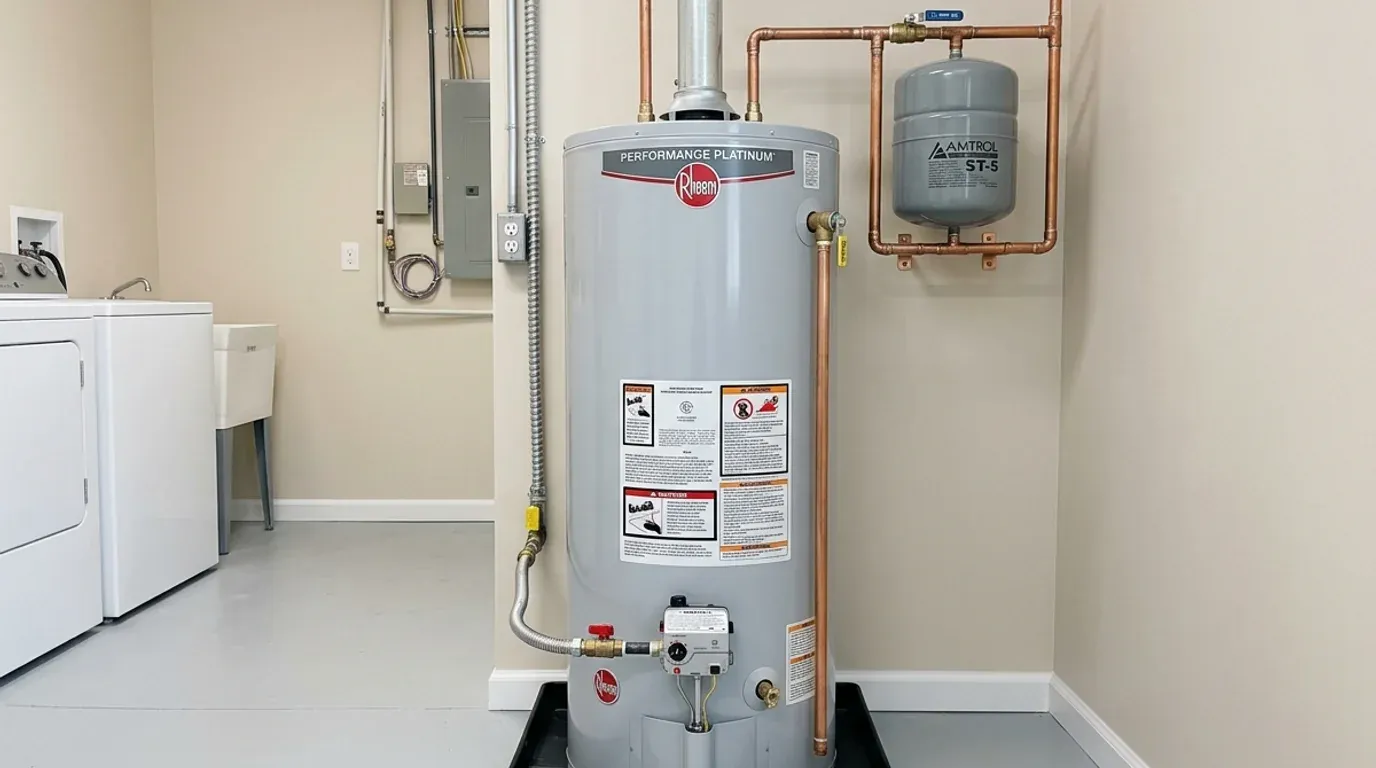
Water Heater Replacement & Installation - professional diagnostic equipment, valves, and water heater repair components

Engineering Overview & Common Failure Modes

Residential storage water heaters reach the end of their operational lifecycle when internal corrosion breaches the glass lining or tanks exceed ten to twelve years of age. Replacement installations require upgrading supply lines to dielectric unions, installing thermal expansion tanks to absorb street pressure spikes, and updating exhaust flue venting to meet modern safety codes. Technicians calculate household peak-hour demand in gallons, size gas supply lines or electrical circuit breakers, install full-port brass drain bibs, and plumb temperature-pressure discharge lines safely to outside drains. Proper equipment sizing guarantees steady household hot water while meeting regional efficiency requirements.

When Replacement Makes More Sense Than Repair

Vessel age exceeding ten to twelve years
Internal steel linings near the end of their design life, making repairs uneconomical.
Rust-tinted water coming from hot taps
Depleted sacrificial anode rod allowing direct rust corrosion of the internal steel shell.
Active moisture seepage along tank base
Microscopic stress fractures in the tank bottom that cannot be welded or patched.
Repeated mechanical breakdowns
Cumulative repair costs approaching half the price of a modern high-efficiency unit.

Standard Diagnostic & Repair Protocol

Step 1: Calculate Peak-Hour Demand
Assess household bathroom fixtures and simultaneous appliance usage to determine gallon sizing.
Step 2: Inspect Fuel and Venting Code
Verify flue pipe clearances, combustion air supply, and gas pipe diameter meet current standards.
Step 3: Install Expansion Protection
Mount and calibrate a thermal expansion tank matching household static water pressure.
Step 4: Commission System Safely
Fill tank completely to purge air pockets before energizing electrical elements or firing gas burners.
Experiencing These Symptoms?
Call our dispatch team with your equipment brand and approximate age for fast routing.
Call 877-315-0972

Request Diagnostic Service

Speak with our technical intake team to discuss your water heater replacement & installation symptoms and receive clear pricing estimates.

877-315-0972

Frequently Asked Questions: Water Heater Replacement & Installation

Practical answers regarding troubleshooting, part replacements, system lifespan, and safety precautions.

Units between eight and twelve years old exhibiting tank corrosion, severe sediment buildup, or major leaks should be replaced for reliability.
Closed plumbing systems with backflow preventers trap expanding heated water, creating dangerous pressure spikes that rupture tank seams.
Atmospheric units rely on rising hot exhaust up vertical chimneys, whereas power-vented units use electric blowers to push exhaust horizontally through PVC.
Dielectric fittings isolate dissimilar metals like copper and galvanized steel, halting galvanic corrosion at the tank inlet and outlet ports.
Modern foam insulation minimizes standby heat loss, keeping operating costs comparable while preventing hot water shortages during peak morning hours.
Conversion is possible provided gas supply lines, electric service panels, and venting routes are updated to satisfy high-demand requirements.
Plumbing code mandates running the relief pipe downward terminating within six inches of the floor or outside into a drain pan.
Annual tank flushing to purge mineral sediment and replacing sacrificial anode rods every four years preserves internal tank steel.
Direct Technician Routing

Avoid Catastrophic Water Damage. Call for Immediate Service.

Connect with our diagnostic dispatch desk for fast evaluation and technical assistance with your water heater replacement & installation.